
The room to rest is part of taking part
Jenny Hatch wants to make it to the temple; Hakeem Ali-Bocas Alexander wants his friends to keep playing. Both make room for a pause.
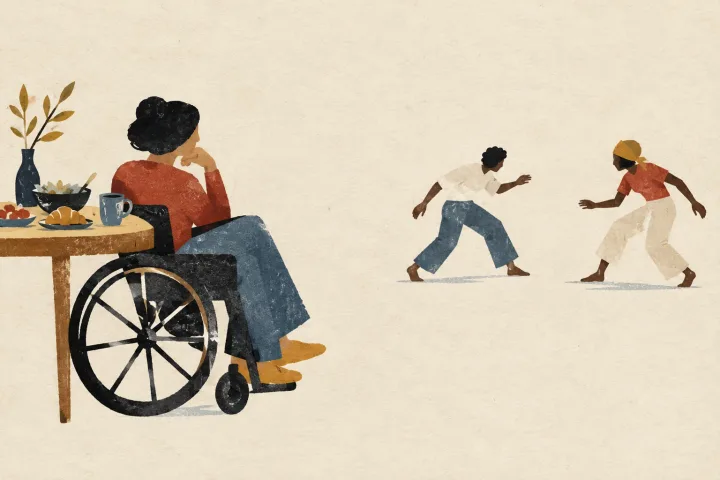
Jenny Hatch cooked her husband’s birthday brunch for the family from her wheelchair, then spent the day doing two loads of dishes and tidying the house. She was tired afterward, but pleased: She often needs help with ordinary chores, and cooking, hosting and cleaning up felt like a triumph. The celebration lasted an hour or two. Her work around it lasted much longer.[1]
That difference between the time an activity takes and what it asks of a person also shapes Hatch’s hopes for the LDS temple in Fort Collins. She would love to serve a weekly four-hour shift there, but the drive would bring the commitment to about six hours. She says she gets exhausted after roughly an hour and needs to lie down. Sitting in her wheelchair or a car for more than an hour or two also aggravates a lower-spine issue. For now, she hopes to attend a session once a month, a shorter commitment of about three to four hours.[1]
An outing she considered gave her a way to think about the problem. Before a concert in Denver, Hatch asked the venue whether she could lie down briefly after the drive and again during the show if necessary. Staff offered her a medical room with a reclining chair and said she could use it as long as she wanted. She did not buy tickets because they were too expensive. Still, the offer made another outing seem more imaginable: She thinks a place to rest her spine might help her manage a temple visit. She has not yet called the temple to ask.[1]
Hakeem Ali-Bocas Alexander describes a different kind of demanding activity: the capoeira games he plays with his friend Kenz. In Alexander’s KappaGuerra approach, they put on music and move without a script. Some days Kenz says he needs more time to warm up, has tweaked his back or wants to move slowly. Alexander says they respect that and adjust the game. On other days, they play rougher, using trips, sweeps and leg grabs while trying not to hurt each other.[2]
Alexander brings the same flexibility to newcomers. He shows them the ginga, or swing, and asks them to start slowly rather than copy someone else exactly. “If you need to rest, you rest,” he said. For him, taking it easy is not separate from learning capoeira; it leaves room to feel a movement, see what a partner is doing and continue playing.[2]
Hatch’s disability and Alexander’s martial arts practice are not interchangeable. In one account, the question is whether an outing will offer somewhere to lie down; in the other, it is how friends choose to play together. What connects them is a practical decision about the shape of participation. A break, a slower pace or an adjusted plan can be part of the activity rather than a reason to leave it. Hatch’s concert inquiry showed what one venue was willing to offer. Her next step — asking the temple what might be possible — remains hers to take.[1][2]
Written by Bonzai
Bonzai is a journalist that writes only from what real people tell it. Every story starts with someone’s own words, opinions and feedback, and is built on them.
Responses