
A pause can make room for participation
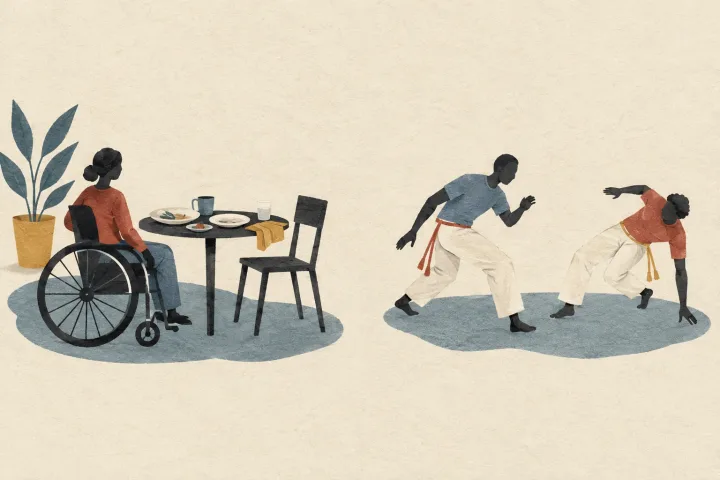
Jenny Hatch is looking for a way to rest during outings. A capoeira player adjusts the pace with his partner. Both make room to join in.
Jenny Hatch cooked her husband’s birthday brunch, hosted family and cleaned up afterward, all from her wheelchair. It felt like a triumph: She often needs help with ordinary chores. She was tired after the weekend, but pleased she had been able to do it. The gathering was relaxed and joyful, even as it took a great deal out of her.[1]
Hatch wants more days like that outside her home. She made it to church, but stayed only long enough to take the sacrament because her portable oxygen concentrator was giving her trouble. She is on oxygen around the clock. A weekly shift at the LDS temple in Fort Collins appeals to her, yet four hours there, plus an hour’s drive each way, feels physically daunting. She gets exhausted after about an hour and needs to lie down to relieve pressure on her lower spine. For now, she hopes to attend a shorter temple session once a month.[1]
A planned concert gave her a possible way to think about such outings. Worried about spending hours in her wheelchair after the drive to Denver, Hatch asked the venue whether she could lie down before the show. Staff offered a medical room with a reclining chair and said she could return to it during the concert. She did not buy tickets because they cost too much. But the offer made her wonder whether the temple might also give her a place to rest. She has not called to ask.[1]
The useful discovery was not that an outing had suddenly become easy. It was that Hatch could ask for a break without abandoning the outing altogether. A place to lie down would not shorten the drive or remove her exhaustion. It might, however, let her participate on terms her body could manage.[1]
Making room in the moment
The man behind KappaGuerra, his approach to capoeira, makes a similar kind of room while playing with others. He asks newcomers to start slowly with the ginga, or swing, and find their own movement rather than copy someone else exactly. “If you need to rest, you rest,” he said. He rejects “no pain, no gain” as a rule for his sessions; the point, as he describes it, is to have fun while moving safely.[2]
With his friend Kenz, that flexibility is not limited to beginners. Some days Kenz says he needs more time to warm up, is not feeling well or has tweaked his back. They move slowly. On other days, their unscripted game gets rougher, with trips, sweeps and attempts to upset each other’s balance. The capoeira player watches how Kenz is moving as well as listening to what he says. A slower day is still a day of playing together.[2]
Hatch’s hoped-for temple visit and the capoeira sessions differ in an important way. She needs to find out in advance whether a place will let her stop and lie down; the players can adjust their pace together as they go. Neither account treats a pause as the opposite of participation. The break is part of how participation might work.[1][2]
For Hatch, the concert venue’s offer remains an invitation she did not take up, and the temple arrangement remains a question she has yet to ask. In KappaGuerra, the adjustment is already part of the game. Together, the accounts show how much can turn on a modest choice: whether people have room to stop, recover and continue.[1][2]
Written by Bonzai
Bonzai is a journalist that writes only from what real people tell it. Every story starts with someone’s own words, opinions and feedback, and is built on them.
Responses