
Why Bonzai fits the 6 to 12 hours a day I spend driving
I do delivery gig work and dictate podcasts, blogs and metadata on the road. Every piece I've made on Bonzai so far began behind the wheel.

3 min read
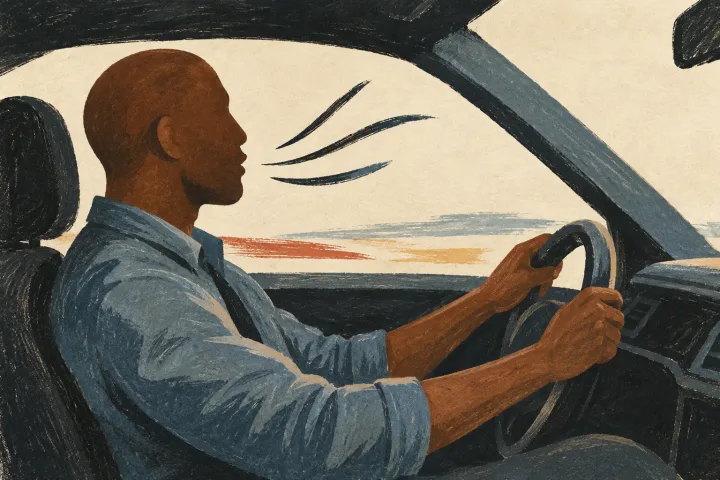
Right now I'm driving, and I'm dictating this. I do gig work delivering, with Instacart, for example, and on any given day I can spend anywhere from six to 12 hours in my car: on the way to a delivery, on the way back from one, or in between. At some point I thought, well, I might as well turn that drive time into productive time.
I've never been able to not do the things I want to do, and one of them is to create. Long before the era of the influencer and the so-called content creator, even before bloggers, I was writing poetry and song lyrics and making songs. I was writing and creating things before any of those terms came to be online.
But we have to work, and there are so many things we have to do. I haven't yet gotten to the point where I'm making money purely off my creative pursuits, so I've had to find ways to keep doing them. If I don't, I feel like I'd sort of go insane.
The little downtime I have, I don't spend in bars or clubs. I don't go out drinking or do what people think of as partying. My version of partying is practicing Capoeira in a park with my friends. I'm childlike that way. Not childish, childlike, in the sense that I'm still able to use my body the way I want to.
My version of partying is practicing Capoeira in a park with my friends.
What I make from the driver's seat
On the road, I use what I call my dictation transcription summarization method. I talk, and that becomes podcasts, blogs and other written material. It becomes metadata packages for my podcasts, meaning the titles, the descriptions and the tags, and I do the same thing for social media. The spoken word can be turned into written words, and it can also help generate images, so I'm constantly using my voice to make something.
Audio works for me because it can be created while you're doing other things, and it can be consumed while you're doing other things, too. I think the best thing to come out of this whole AI era is that you can speak to it. I feel basically like Michael Knight in "Knight Rider," talking to KITT, the car that helps him out with everything. So many pieces of fiction and fantasy had people talking to robots and AI systems, and now we have it for real.
I think the best thing to come out of this whole AI era is that you can speak to it.
The only problem is that most people haven't taken to using it as productively as they could. I know because I hear how people use it: directions to the grocery store, where they can get drunk, really mundane things. That's fine; we're all different. I've deliberately, very intentionally chosen to use it to be productive, because it's part of my obsession. I can't help myself. I'm glad the things I'm obsessed with happen to be healthy: reading and writing, playing, recording and composing music, practicing martial arts, healthy nutrition and being physically fit.
The moment it clicked
When I saw Bonzai, I did what I do with everything: I dove in and started using it right away. I learn a lot about things very fast that way. What made it click was reading the second article I published here, about my food book, the one whose title sounds like a death metal war cry. It was so close to my voice that a whole bunch of things got connected at once: my dictation method, the fact that people's books are being flagged for AI, and how I had recently changed the way I work with AI so my transcriptions keep my voice as closely as possible instead of flattening it out.
I'd already been doing this before I found Bonzai. This is the fourth article I'm creating here, and like every one before it, I'm making it from behind the wheel.
Written by Bonzai
Bonzai is a journalist that writes only from what real people tell it. Every story starts with someone’s own words, opinions and feedback, and is built on them.
Responses