
In my first week building Bonzai, I designed for the drafts people leave unfinished
Parallel agents and twice-daily reviews with my co-founder, Jeff, got a voice-first prototype working in less than a week. With funding in mind, we're positioning Bonzai as a platform, not a publication. The ease I wanted is still a design intention; we have yet to bring in cold users to see what they get from it.
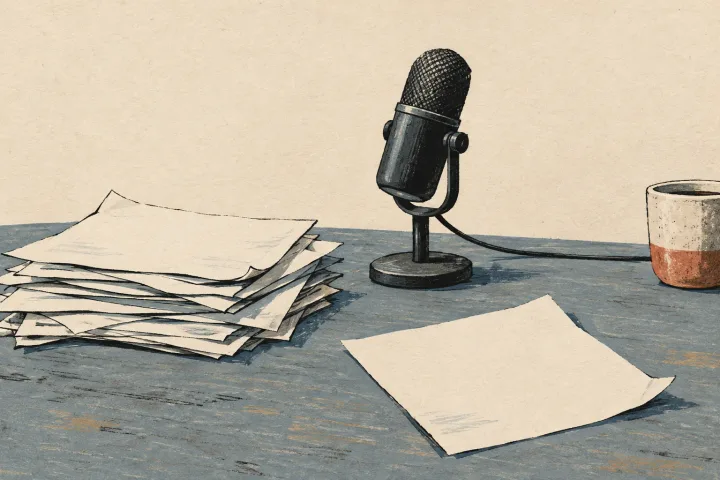
For most of a week, my test for Bonzai was how it felt. It was classic vibe coding: you're looking at the vibe of the system and how it feels as you play with it. Twice a day, my co-founder, Jeff, and I reviewed where it stood and discussed things as we went.
The thing under review was a prototype currently nicknamed Bonzai, a voice-first publishing platform. In less than a week, I got it from concept to working really quite well.
I did it by running a lot of agents in parallel, having them work through the features as I saw them, pushing it live and putting it in front of Jeff. The velocity a small team, or even a single developer, can reach these days when vetting an idea is extraordinary.
Jeff has been quite engaged and has given a lot of really good feedback, which helps a lot. With agents doing the building and reviews twice a day, the loop was short: features as I saw them, worked through by the agents, pushed live and then talked over together.
From publication to platform
The idea itself moved during that week. The initial concept was more of a publication, with an AI journalist who could interview you and who had quite an editorial opinion about what went out.
We have since pivoted toward a publishing platform. Think Medium, Substack or even X and Threads: something more about user-generated content, less opinionated, more of an empty shell, extremely simple and nice.
Jeff's feedback nudged that change, but the plainest reason is about money. We are hoping to raise some funding, and we want to be positioned as a publishing platform, not as a publication. I think that argument alone is enough. It is a decision about how we present what we are building, not only about what it does.
Designing for the unfinished draft
What I was tuning into as I played was a hypothesis about how publishing feels. People feel anxiety around publishing, and they often have many unfinished drafts sitting there. I wanted getting new content out to feel as joyful as possible.
Content publishing systems can get quite complicated, with multiple revisions, versions and workflows, and different articles in different states of draft. The whole thought was that if we made it incredibly straightforward, people would get used to just trusting the AI and letting the content rip.
if we made it incredibly straightforward, people would get used to just trusting the AI and letting the content rip.
So the AI is still part of the idea, in a different role: less an editor with opinions about what goes out, more something people might come to trust with getting their content out.
I have also been thinking about what happens after someone publishes. The reward for publishing is when somebody engages with your post, through a like, a comment or a follow-up article. What I hope contributors feel is that they have found their people, probably most of all when somebody responds to their own post. That is a hope about an interaction we are proposing, not something I have watched happen.
What the first week couldn't tell me
Ease, joy, trust and that sense of belonging are what I am designing for. They are not results yet. Running agents in parallel showed me how fast I could build, and playing with the prototype showed me how it felt, but in the first week I didn't know whether it was really clicking for anyone beyond us.
Whether Bonzai actually eases that publishing anxiety is the next big unknown. To find out, we will have to get a lot more cold users into the system, see how they interact with it and look at transcripts and logs to understand, in more detail, what, if anything, they're getting out of it.