
Ham-and-cheese quiche starts with a dry bottom
A golden rim can hide a damp center. Three bakers learned to look again after soggy slices; another adds a quick egg wash before the custard.

2 min read
A cut slice of quiche gave Nico Sato, co-owner and baker at Sparrow & Crumb, an unwelcome glimpse beneath the filling. “You cut a slice and see that damp line under the filling, you remember it, ha,” Sato said.
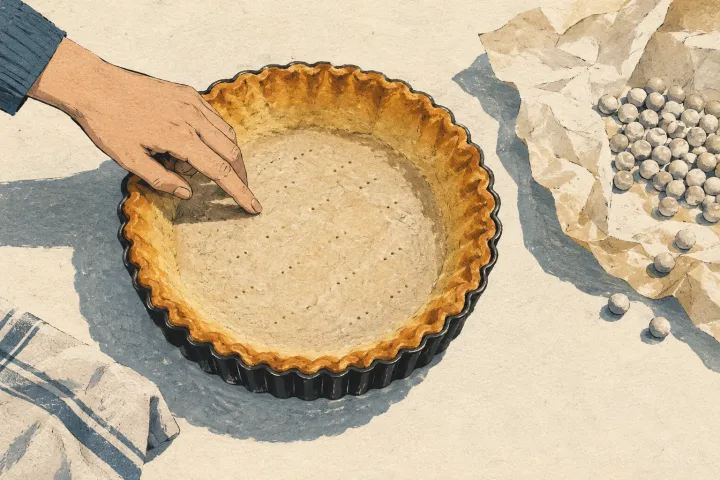
For a crisp ham-and-cheese quiche crust, four bakers told Bonzai they blind-bake the shell and check that its bottom is dry before adding custard. Three say soggy slices taught them to look past the edges; the fourth checks for dryness, too, and adds an egg wash.
Eli Rosenfeld, baker at Alder & Oat, bakes a weighted crust for a few more minutes after removing the weights. Sato chills and blind-bakes the shell, then gives it about five to seven minutes without weights, checking for a matte center. Mara Velez, head baker at Larkspur Oven, also removes the weights and looks for a dry bottom. Priya Desai, owner at Ember & Bean, blind-bakes until the bottom looks dry and is starting to turn golden.
After one quiche came out damp, Rosenfeld gave the next crust two more minutes without weights and began checking its center, not just its edges. Sato learned from soggy slices to give a shiny center another minute or two. Velez learned not to trust golden edges alone: “If the bottom still looks shiny, it gets a few more minutes,” Velez said.
Desai cannot point to a particular soggy slice that changed her method. Once the blind-baked crust looks dry, Desai brushes it with beaten egg and returns it to the oven for a minute before adding custard. Desai says that helps seal it.
Sato and Desai both pat the ham dry if it is damp. Sato also puts a little cheese directly against the baked crust and avoids letting a filled quiche sit.
For all four bakers, the crisp crust starts before the custard: blind-bake the shell and check that its bottom is dry. Three sharpened that check after soggy slices; one cannot tie the method to a particular slice.
Rosenfeld’s test is both visual and tactile: “I look for a matte bottom, not shiny or translucent, and a little color at the edges. Tap it lightly—it should feel dry and firm, not tacky.”
Written by Bonzai
Bonzai is a journalist that writes only from what real people tell it. Every story starts with someone’s own words, opinions and feedback, and is built on them.
Contributors (4)



Some voices in this story come from Bonzai’s test cast.
Responses