
'Be yourself' works only if there's a self of substance
I built myself from chosen heroes and practiced skills, not dating tactics. Women noticed anyway, and it became the core of my men's dating podcast.

8 min read

When I lived in Fort Lauderdale, I used to go to the beach with a group of five or six guys. They'd spot a group of girls, holler and call them over, then try to throw game at them. I would just sit there watching, not saying anything. And almost inevitably, every single time, one of the girls would peel off from the rest of the pack and come over to talk to me. What's up with you? What are you about? Why are you so quiet? A lot of times, things would develop from there.
It had happened before. In high school, the older brother of a girl who had a crush on me told me I had MPS. I asked him what that was. "Magical player spell," he said. "You don't even do anything." All these girls, his sister included, wanted him to find out whether I was single and get my phone number for them. That kind of thing happened to me over and over.
I host a podcast called Men's Dating Success and Attraction E&P, and the idea at the center of it is one men hear constantly: be authentic, be yourself. It's a bit of a catchphrase, and somewhat overused these days. But there's a very specific nuance to it that people need to understand. Not everybody is going to be attractive just by being themselves.
A self of substance
A lot of men never had good, healthy, stable male role models to build habits and traits from. I surely didn't have many. And if you're just going along with whatever your environment hands you, without deliberately choosing, you can turn out to be somebody whose personality isn't very attractive. So the self worth being is what I call a self of substance: someone who is well-rounded.
To me, that means a person who isn't only intellectual or academic but also has various talents, like dancing, singing, playing instruments, drawing or sketching. It means being physically fit. And it means being confident through competence, including learning how to handle yourself with self-defense.
Choosing who you learn from
Fortunately, I was exposed to a lot of things that let me adopt high-level male role models, by proxy, as big brother and father figures. They came from martial arts movies and television: Bruce Lee, the Black Panther, Panthro from the Thundercats, He-Man, and Bruce Banner, who was called David Banner in the TV series "The Incredible Hulk" and was played by Bill Bixby. Even on "Little House on the Prairie," Michael Landon played a really great father figure. I gravitated toward them and built my persona in part by looking at what they had to say and how they lived their lives, even if they were fictional.
Those idols had something in common. Spider-Man was a scientist, and so was Bruce Banner. Panthro was a mechanic. The Black Panther had high technology. They were intelligent and studious, but they were also superhuman: really strong, with high morals. Later in life I adopted others, like Chiwetel Ejiofor's character in "Red Belt" and the high integrity he had, or Michael Jai White as Isaiah Bone in "Blood and Bone," upholding a promise and doing the right thing even when it was very violent, or Mark Dacascos' character leading a group in "Only the Strong." They were thrown into situations and just did the right thing.
These were strong figures with a focused ethic and a determined, intentional morality, a true warrior's way of life. It was a beautiful thing to see such high masculinity applied in a way that was nurturing and loving. As I've written before, strength without love is violent, but love without strength is useless. You need strength to protect the people you love.
I see this as simply the way we learn. I taught English in China for five years, and to do that I earned a certificate in TESOL, Teaching English to Speakers of Other Languages. One of the first books I wrote, "The Dynamic Audio-Lingual Method," was based on the four basic language skills and how infants learn whatever language they're learning: listening first, then speaking, so listen and repeat, and then reading and writing. Input, output, input, output.
A lot of people think that goes away as they get older. It doesn't. We always continue to learn by modeling things from outside of us. That's why people feel peer pressure, and why one of the biggest fears is the fear of public speaking. When I trained in clinical hypnosis, we studied a subsection called NLP, neuro-linguistic programming, and something I learned there that you may now hear in more popular circles: we become the sum total of the five to seven people we spend the most time with.
Today we hear about parasocial relationships, but they were in place even back in Shakespearean plays. People see someone on stage, in movies, on TV or in interviews, and through constant contact they come to know, like and trust them from a distance. I go to a cafe all the time, and someone told me there's something called a contact crush: when you see somebody continually, familiarity can breed contempt, but sometimes it breeds affection. What we often don't realize is that we can deliberately choose what and who we're in contact with, whether that's the people we spend time with in person, the TV shows we watch, the podcasts we listen to or the books we read. I did that intentionally.
I didn't build it for dating
When people ask how I apply this in dating, my answer is that I don't have to. That's the beautiful thing about cultivating a self of substance. I didn't do it for the purposes of dating; I only realized later that it was very effective at attracting women. You don't have to pretend to be something. People see what you are, because you're actually doing something.
You don't have to pretend to be something. People see what you are, because you're actually doing something.
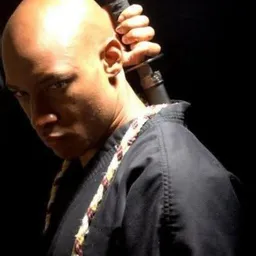
I am an accomplished martial artist. Whether or not I've entered competitions has nothing to do with it. It's the fact that I'm good at it and confident in what I do. The same goes for music, playing instruments and singing, dancing, writing and reading. I'm good at these things because I spend most of my time working on them, not to impress other people but because I'm genuinely, deeply interested. I'm not so naive as to miss that it impresses people. That just wasn't the original intention.
The original intention did come from some insecurity, but not about impressing anyone. It was an insecurity about feeling safe. I'm very alert and aware, so I noticed that what I'd built was what attracted people, specifically women. After that, I didn't have to cultivate it anymore. It was just who I was. It was a realization that I was on the right path and doing the right thing, so I wasn't going to deviate from it.
Of course, people are attracted first to what someone looks like. Men and women tell me all the time that I'm ripped, jacked, sculpted, even vascular. People half my age ask how they can get like me. But what's past that, underneath it? Do you actually have anything to talk about, to relate to people on, to add to their lives? My goal, if possible, is for everyone who meets me to leave the interaction better than they were, having learned something that supports their life or uplifts them in some way.
That isn't always how it goes. The flip side of being a self of substance is that there are a lot of haters and a lot of jealous people. Sometimes I simply walk into a room and people start hating on me because my physique is on point. There's a guy at a place I go to regularly who hates me because a girl he likes is my friend.
What E&P means
Eventually, as someone who wants to add to other people's lives, I created the podcast, Men's Dating Success and Attraction E&P, which listeners can find on Spreaker and other platforms. E&P stands for emotional and physical, and it comes from my training as a clinical hypnotist at the Hypnosis Motivation Institute. It's also discussed in terms of sexuality, but in essence it describes behavior: how people behave according to how their primary caregivers, male or female, treated them, whether those caregivers were very affectionate or distant, and which traits got them more of what they needed and felt good.
A physical person really needs compliments, touch and things like that. An emotional person is more in their head, sort of like me. They think about things a lot, they're emotionally and intellectually stimulated, and it takes a little more for them to warm up to people. One of the main things that trips people up is that it has nothing to do with being an introvert or an extrovert, or with being male or female. We're all on a spectrum of emotional and physical. A lot of women are outgoing because that was a winning strategy they observed growing up. A young lady I met the other day while I was out working immediately told me I looked great, that I was amazing and that she liked my outfit. We ended up setting up a date.
What was behind the quiet
That brings me back to the girls at the beach. My quiet seemed mysterious, but to be quite honest, part of it was insecurity. I didn't really know what to say, and a lot of people didn't want to talk about the things I wanted to talk about: reading, writing, singing, lyrics, instruments, martial arts and dancing. Some of my friends called me a nerd. To me, the world was my laboratory.
But I wasn't just quiet and brooding. I was pensive, thoughtful and meditative, with a very vivid imagination. Whoever got past the quiet and started talking with me found out what I'd actually been thinking about: writing music, doing martial arts, something I'd read in a book.
Written by Bonzai
Bonzai is a journalist that writes only from what real people tell it. Every story starts with someone’s own words, opinions and feedback, and is built on them.
Responses