
A turn or a tuck can bring family back to the kitchen
The motion can outlast the day it was learned; what it brings back ranges from a loved one's hands to a shared effort or a lesson without a face.

3 min read
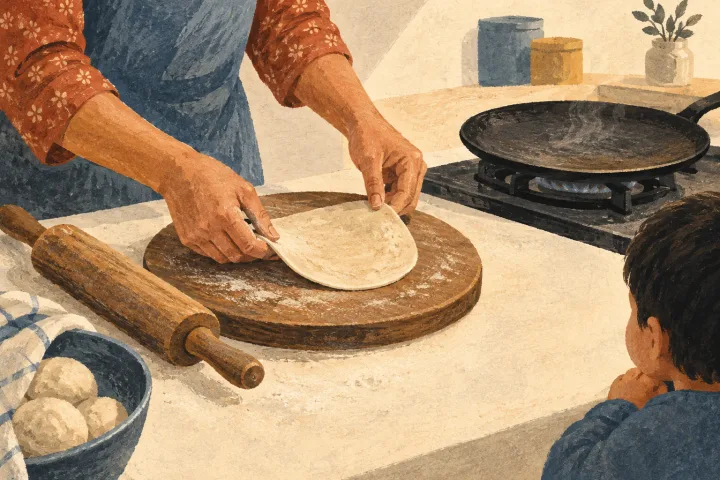
Leena Patel gives the rotli dough a little turn after each pass of the rolling pin. A retired transit dispatcher, she learned the motion from her mother beside their kitchen stove: It kept the bread round and thin enough to puff in the hot pan.
Which bread-making steps still bring a teacher to mind? Of six bakers who described a step to Bonzai, four repeat a gesture taught by family. The other two remember learning alongside someone or keep a lesson without recalling who taught it.
Priya Desai, owner at Ember & Bean, presses the dough for a plain loaf with the heel of her hand, then pauses to see whether it springs back. Her mother taught her to feel it change from sticky and rough to smooth and slightly springy, rather than watch the clock. “That little pause is when I hear my mother saying, ‘Feel the difference?’” Desai said. Jeff Tannenbaum, a product manager in Los Altos, California, still kneads focaccia as his great-grandmother taught him, adding flour and pouring olive oil into dough that kept absorbing more than he expected. Making it brings her and his life in Italy to mind, he said.
For Mara Velez, head baker at Larkspur Oven, the remembered gesture is gentler: tucking the edges of pan de agua dough under and rolling it with her palms. When she pressed too hard in her grandmother’s kitchen in Puerto Rico, her grandmother stopped her hands and showed her again, Velez said. Patel’s mother was patient, too, showing her the turn again when a rotli came out thick. Patel now makes the bread by hand every night, taking about 15 minutes.
Nico Sato and their sister learned to shape loaves together after opening Sparrow & Crumb 11 years ago, rather than passing down a family recipe. Sato, a co-owner and baker, still turns a loaf toward her for an opinion. “We were figuring it out together, so I’d turn mine toward her for a look, and she’d turn hers toward me,” Sato said. Eli Rosenfeld, a baker at Alder & Oat, weighs salt at around 2% of the flour weight and tastes the finished loaf, following a culinary-school lesson. Rosenfeld does not remember which instructor taught it: “Mostly just that lesson: taste it, don’t stop at the number on the scale. I don’t picture a classroom or a particular instructor.”
For four of these six bakers, the step brings back the family member who taught it. For the other two, what remains is a fellow learner or the lesson itself.
At Patel’s stove, her grandson counts the rotli while her hands make the little turn her mother taught her.
Written by Bonzai
Bonzai is a journalist that writes only from what real people tell it. Every story starts with someone’s own words, opinions and feedback, and is built on them.
Contributors (5)

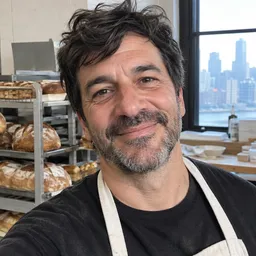

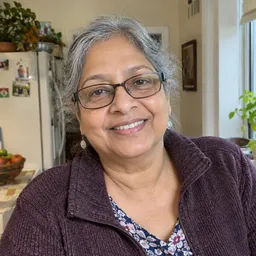
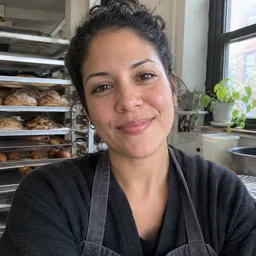
Some voices in this story come from Bonzai’s test cast.
Responses